

Category "Language and Creativity"

12Nov2025
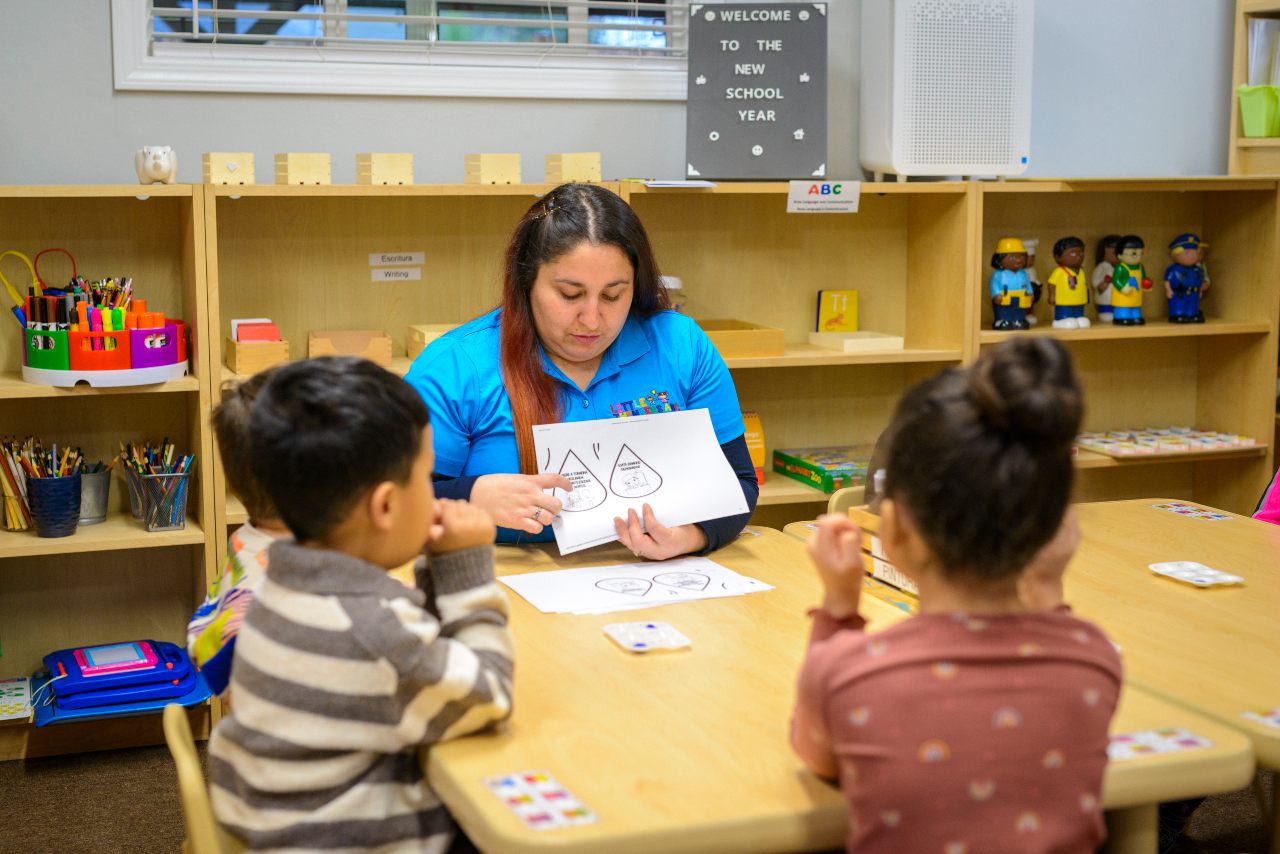
Little Thinkers ABC teacher leading a small group lesson at a classroom table, showing a learning worksheet to two students.

Building a Foundation for Global Learning

At Little Thinkers ABC Preschool and Childcare, we believe that language opens doors. Our bilingual program introduces children to both English and Spanish, allowing them to grow as confident communicators while developing a deeper appreciation for cultural diversity. Learning two languages at a young age is more than just a skill—it’s an opportunity to expand how children think, connect, and express themselves in a multicultural world.

In our classrooms, bilingual learning is woven into everyday activities. From songs and stories to play-based lessons and group discussions, children absorb language naturally. This immersive approach ensures that they not only understand the words but also the cultural meaning behind them, helping them communicate authentically with others.

Why Early Bilingual Education Matters

Research shows that young children have an incredible ability to learn multiple languages simultaneously. Early exposure to a second language enhances cognitive development, memory, and attention span. It also encourages empathy and curiosity about different cultures, shaping children into open-minded individuals ready to thrive in a diverse society.

At Little Thinkers ABC, we take pride in fostering an inclusive environment where every child’s language and cultural background is celebrated. Bilingual learning helps children appreciate their own identity while understanding and respecting the world around them. It’s not only about learning words—it’s about connecting hearts and minds.

Cognitive and Social Benefits

Learning two languages improves more than communication—it builds brainpower. Studies show that bilingual children often develop stronger problem-solving and multitasking skills. They learn to switch between languages, which strengthens mental flexibility and enhances creativity.

Socially, bilingual education allows children to engage more confidently with others. They can make friends across cultures and express themselves in new ways, leading to a stronger sense of belonging. These skills extend well beyond preschool, giving children a lifelong advantage both academically and personally.

Connecting Families and Communities

Our bilingual program also strengthens connections between families and the school community. Parents are encouraged to participate in cultural activities, bilingual story times, and celebrations that honor traditions from around the world. This shared experience creates a bridge between home and classroom learning, allowing children to see language as something living and meaningful.

By involving families, we ensure that bilingual education continues outside the classroom, reinforcing what children learn each day. Together, we build a community that values diversity, inclusion, and collaboration.

Nurturing Future Global Citizens

At Little Thinkers ABC, bilingual learning is not just a curriculum feature—it’s a commitment to preparing children for a global future. By nurturing both linguistic and cultural awareness, we help children grow into confident, adaptable learners who see the beauty in every language and culture.

Our bilingual classrooms are places where curiosity thrives, friendships bloom, and communication barriers disappear. The result is a learning experience that empowers children to express themselves freely, think critically, and appreciate the richness of the world around them.

Enroll Your Child in a World of Learning

If you want your child to gain a head start in communication, confidence, and cultural understanding, Little Thinkers ABC is the perfect place to begin.


Contact us today to learn more about our bilingual education program and schedule a tour. Let’s help your child discover the joy of learning in two languages—and the limitless possibilities it brings.

31Jan2025

Understanding the Importance of Bilingual Education

Cognitive Advantages of Learning Two Languages

Learning two languages can significantly enhance cognitive development. Studies show that bilingual children often excel in problem-solving and critical thinking skills. When children engage with more than one language, they develop better focus, memory, and flexibility in their thinking. At Little Thinkers ABC, our Spanish immersion program provides a rich environment where young learners naturally absorb and apply both languages in their daily interactions.

Cultural Awareness and Sensitivity

Bilingual education also fosters cultural appreciation and sensitivity. When children learn a new language, they gain insight into the traditions, customs, and values of different cultures. This exposure helps them develop an open-minded attitude, encouraging respect and empathy for others. At Little Thinkers ABC, we integrate cultural learning experiences that allow students to explore diverse perspectives, making them more socially aware and globally connected.

Boosting Academic Performance Through Language Skills

Research indicates that bilingual students often perform better in subjects like math and science. The ability to think in two languages enhances problem-solving abilities and improves comprehension skills. At Little Thinkers ABC, our bilingual curriculum strengthens literacy and communication skills, providing students with a solid foundation for future academic success. By immersing children in a structured dual-language program, we ensure they develop the skills needed to excel in school and beyond.

How Little Thinkers ABC Implements Bilingual Education

Curriculum Design Focused on Language Immersion

At Little Thinkers ABC, we use a creative, play-based curriculum designed to immerse children in Spanish from an early age. Our daily activities encourage children to engage with both languages naturally through storytelling, music, movement, and hands-on exploration. This approach ensures that learning remains fun, interactive, and effective.

Teacher Training and Qualifications

Our teachers are highly trained in bilingual education and early childhood development. They use innovative teaching strategies to make language learning engaging and accessible for all students. Through continuous professional development, our educators stay updated on the best methods for fostering bilingual literacy and cultural competency in young learners.

Parental Involvement in Language Learning

Parental participation is a key element of our bilingual education model. We encourage parents to reinforce language learning at home by reading books, singing songs, and engaging in conversations in both languages. Little Thinkers ABC provides resources and workshops to help parents support their child’s bilingual journey, creating a collaborative learning environment between home and school.

Bilingual Education Benefits for Young Learners

Enhancing Communication Skills

Being bilingual allows children to communicate with a broader range of people. At Little Thinkers ABC, our program ensures that students gain confidence in both languages, helping them express themselves effectively in diverse social and academic settings.

Fostering Creativity and Problem-Solving

Switching between two languages enhances cognitive flexibility, allowing children to think more creatively and approach problems from different angles. Bilingual students develop adaptability and innovative thinking skills, which benefit them throughout their education and future careers.

Preparing for a Globalized World

In today’s interconnected world, bilingualism is a valuable asset. Our program at Little Thinkers ABC prepares students for future opportunities by equipping them with the linguistic and cultural skills needed to thrive in diverse environments. Early exposure to multiple languages sets the stage for lifelong learning and cross-cultural communication.

Challenges and Solutions in Bilingual Education

Overcoming Language Barriers

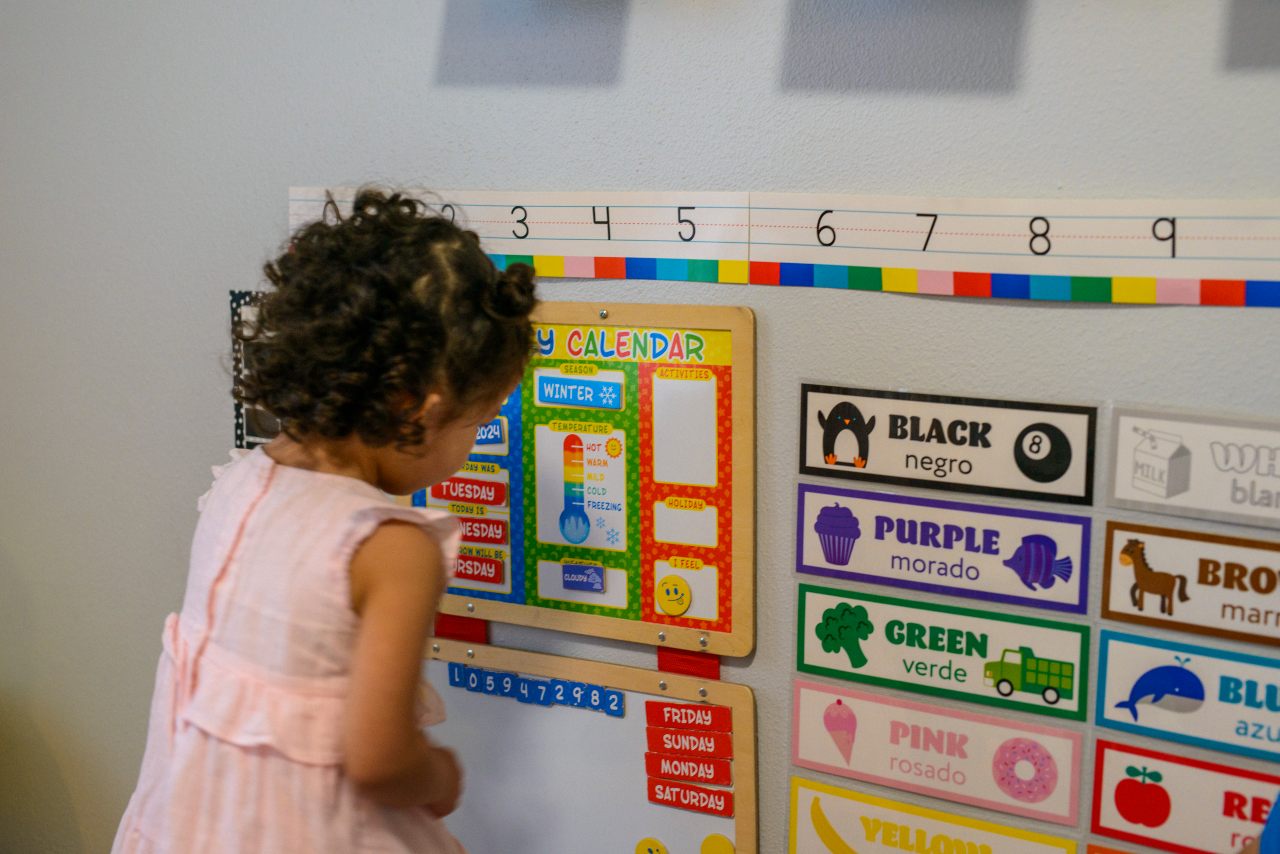
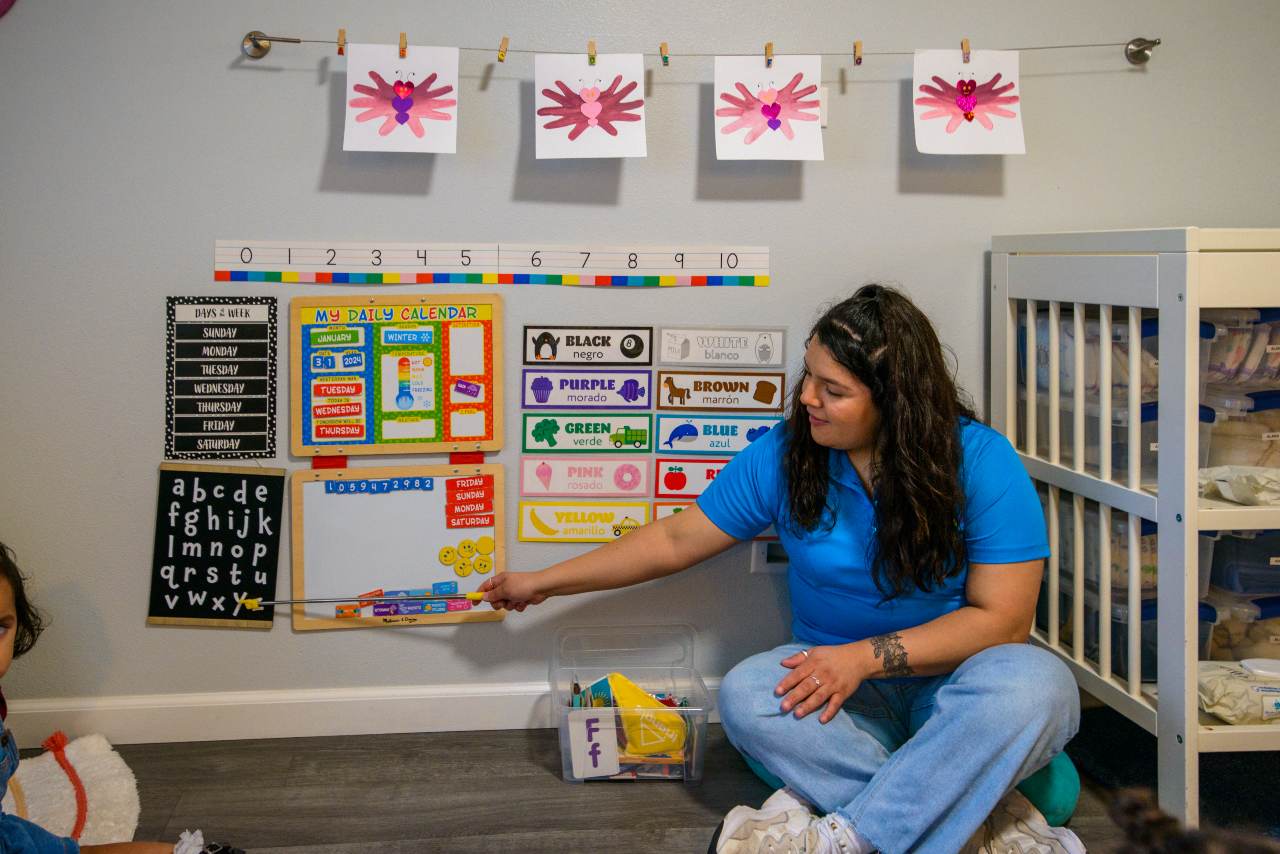
One of the main challenges in bilingual education is helping students who may initially struggle with language differences. At Little Thinkers ABC, we use visual aids, interactive storytelling, and hands-on activities to support language comprehension. Our nurturing environment ensures that every child feels comfortable and confident in their language-learning journey.

Ensuring Equal Opportunities for All Students

We believe every child deserves access to quality bilingual education. Our program is designed to be inclusive, providing individualized support to students from diverse linguistic backgrounds. Through differentiated instruction and small group activities, we ensure that all learners have the opportunity to succeed.

Adapting Teaching Methods to Diverse Needs

Every child learns differently, and our educators are skilled at adapting their teaching approaches to meet individual learning styles. By incorporating movement-based learning, music, and interactive storytelling, we cater to a wide range of developmental needs, making bilingual education accessible and enjoyable for all students.

Conclusion

Bilingual education at Little Thinkers ABC goes beyond teaching two languages; it fosters cognitive growth, cultural appreciation, and academic excellence. By immersing students in Spanish from an early age, we empower them with the skills needed to succeed in a diverse and evolving world. Through our carefully designed curriculum, dedicated educators, and strong parental involvement, we create a supportive and enriching environment where children flourish. Investing in bilingual education means preparing young minds for a future full of opportunities, and at Little Thinkers ABC, we are committed to making that future a reality.

13May2024

Exploring the Intersection of Language Learning and Creativity

colored pencil lined up on top of white surface

The Role of Divergent Thinking

Learning a new language isn’t just about memorizing words and grammar. It’s about thinking in new ways! When we learn languages, we often have to come up with creative solutions because some words don’t have direct translations. This is called divergent thinking, and it’s a super important part of being creative.

Collaborative and Experiential Learning Approaches

Did you know that working with others can help you be more creative? When we learn languages together, through games or talking, we’re using what’s called collaborative and experiential learning. This means we learn by doing and sharing, which is a lot more fun and can help everyone think more creatively.

Language Learning’s Broader Cognitive Benefits

Learning languages does more than just help us communicate. It can also make our brains stronger in other ways! For example, people who speak more than one language are better at multitasking and might even make smarter decisions. So, learning a new language doesn’t just help us talk to more people; it also helps our brains grow stronger and smarter.

Cultural Perspectives on Creativity and Innovation

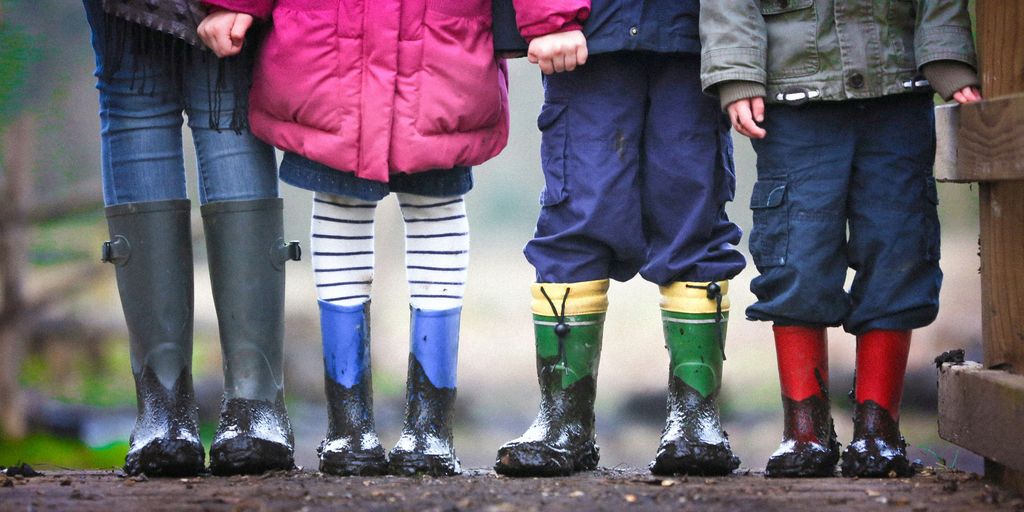
four children standing on dirt during daytime

The Role of Divergent Thinking

Divergent thinking is a process for generating creative ideas by exploring many possible solutions. It typically occurs spontaneously, free-flowingly, and “non-linearly,” generating many ideas in an emergent cognitive fashion.

Collaborative and Experiential Learning Approaches

When we learn with others, we get to share ideas and try new things together. This is called collaborative learning. Experiential learning means learning by doing. Both of these help us understand things better and become more creative.

Language Learning’s Broader Cognitive Benefits

Learning a new language doesn’t just help us talk to more people. It also makes our brains stronger. It can improve our memory, help us solve problems better, and even make us better at multitasking.

By exploring how language learning and creativity work together, we can find new ways to think and learn.

Practical Applications of Creative Language Learning

person writing on brown wooden table near white ceramic mug

Strategies for Enhancing Creativity Through Language

Learning a new language isn’t just about memorizing words and grammar. It’s about thinking in new ways and seeing the world differently. Using a bilingual creative curriculum can help kids at preschools like Little Thinkers ABC in Aloha, Oregon, to think more creatively. This involves fun activities that mix language learning with art, music, and play.

Purpose-Driven Innovation in Language Education

When preschools focus on purpose-driven learning, they help kids understand why they’re learning what they’re learning. For example, using language to solve problems or tell stories can make learning more meaningful. This approach is especially effective in multicultural hands-on experiences, where kids learn about different cultures through language.

From Imagination to Implementation

Turning creative ideas into real-world projects can be exciting for kids. Preschools that encourage this kind of learning allow children to design their own projects using the new languages they are learning. This could be making a simple book, putting on a play, or even starting a small business at school. It’s all about bringing their imagination to life and learning practical skills along the way.

The Future of Innovation in Language Education

Integrating New Teaching Methods

In the future, schools like Little Thinkers ABC will use new ways to teach languages. Teachers will mix games, technology, and group projects to make learning fun and effective. This helps kids understand and use new words in real-life situations.

Adapting to Technological Advancements

As technology gets better, our classrooms will too. We’ll use apps and online tools to help kids learn languages faster. This means they can practice anytime, anywhere, which is super cool!

Fostering Global Collaboration

Learning languages helps us make friends from around the world. Schools will work together across countries to share ideas and projects. This means kids will not only learn new languages but also about new cultures and ways of thinking.

As we explore ‘The Future of Innovation in Language Education’, it’s crucial to recognize the role of early education in shaping young minds. At Little Thinkers ABC, we are dedicated to providing a stimulating curriculum that nurtures creativity and growth. Discover how our programs can benefit your child by visiting our website and learning more about our offerings. Let’s build a brighter future together!

Conclusion

In the exploration of the convergence of language and creativity at Little Thinkers ABC, we’ve delved into how linguistic diversity and innovative teaching methods can significantly enhance creative thinking. The insights from various studies underscore the importance of embracing different cultural perspectives and collaborative learning environments to foster creativity. As we look towards implementing these strategies, it’s clear that the potential for innovation is boundless when we allow language learning to intersect with creative processes. This journey not only enriches the minds of learners but also prepares them to contribute uniquely and effectively in a diverse world.

Summer Enrollment & School Year

This field is for validation purposes and should be left unchanged.
Email(Required)